

Typing accuracy improves when you understand your mistakes. Repeatedly taking a speed test without reviewing the result can reinforce the same errors. A better routine combines controlled copying, a short error log, and targeted practice before the next timed attempt.
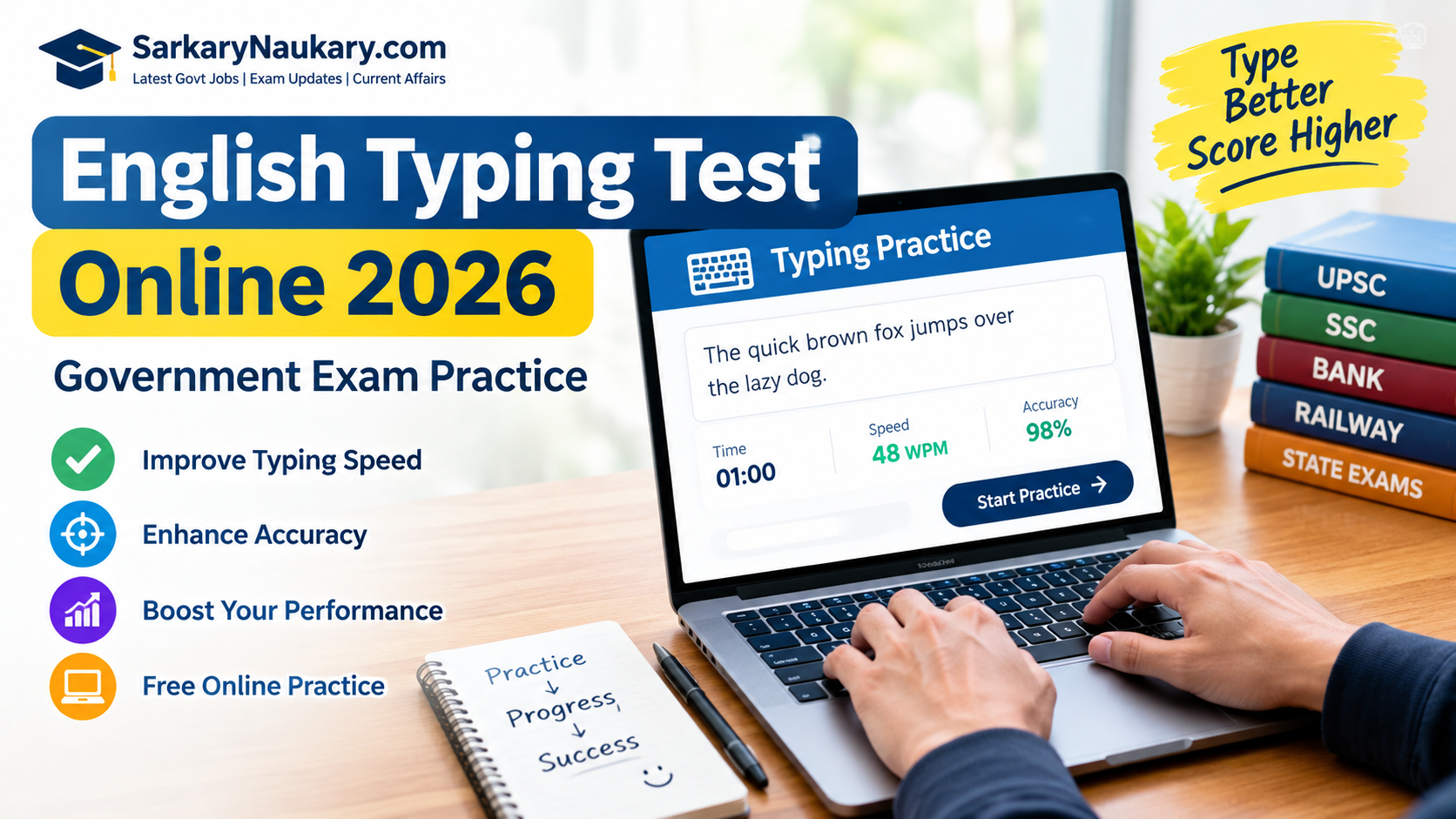
Open SarkaryNaukary Typing Practice on a computer and begin with a passage you have not memorized. Type at a pace that lets you stay in control of letters, spaces, and punctuation.
Separate mistakes into useful groups
Understanding the types of errors you make is the first step to correcting them. While official marking schemes may vary, categorizing your mistakes can help you focus your practice. Common error types include:
- Wrong letter: Typing ‘form’ instead of ‘from’. This often requires slow, deliberate practice of the specific letter sequences you struggle with.
- Missing word: Omitting a word entirely. This can be improved by practicing techniques to maintain your place while reading the text.
- Extra word: Repeating a word. Reading the text in short, manageable groups can help prevent this.
- Spacing: Joining two words together or leaving an incorrect gap. This requires deliberate practice of your space-bar timing.
- Capital or punctuation: Missing a capital letter or a full stop. Practicing with mixed passages that require frequent use of the Shift key and punctuation marks is beneficial.
These are practice categories. The examining authority may classify or penalize errors differently, so do not use this table as an official marking scheme.
Slow down enough to spot the cause
When your accuracy drops, it’s essential to reduce your pace temporarily. Observe patterns: do mistakes occur after a capital letter, at the end of a line, or when you’re trying to catch up with the timer? Solving a recurring transition issue is far more effective than simply retyping random material quickly.
Practice a difficult word correctly within a short phrase, then integrate it into a complete sentence. After this targeted drill, return to ordinary passages to ensure the improvement transfers beyond the isolated exercise.
Keep a small error log
After each timed passage, dedicate a few minutes to recording up to five recurring problems. Note what you intended to type, what you actually entered, and a possible cause for the error. Before your next practice session, spend a few minutes specifically practicing those identified patterns.
For instance, if you repeatedly omit the space after a comma, practice short sentences that contain commas. If you tend to skip a line while copying, focus on exercises that help you maintain your reading position. Review your error log weekly and remove any problems that no longer recur.
Understand accuracy and speed scores
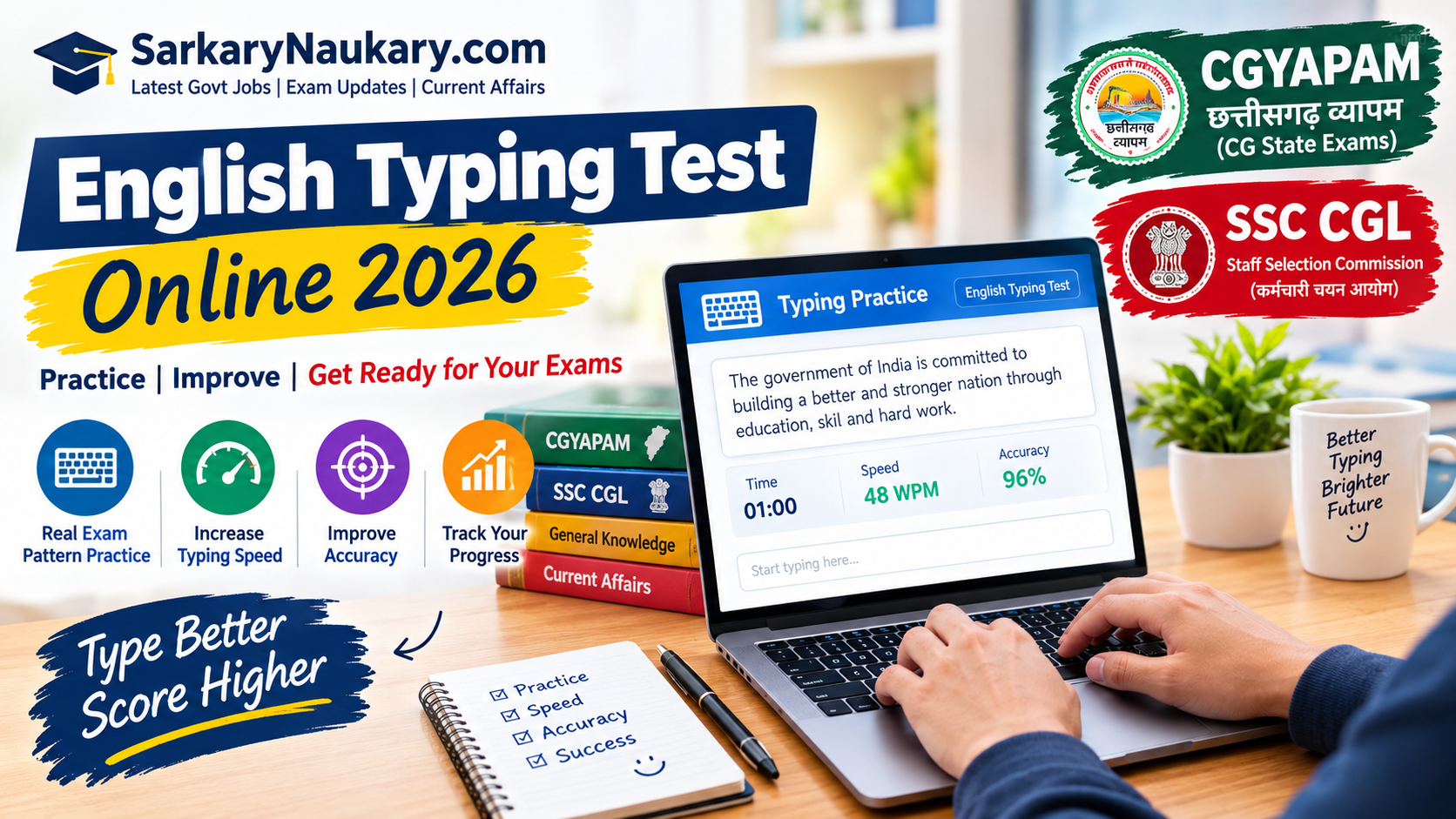
Different practice tools may use varying definitions for accuracy, gross speed, and net speed. A percentage displayed by one website is not automatically comparable to another. It’s crucial to understand how your chosen tool counts corrected errors, omitted words, spaces, and punctuation.
For example, CPCT publishes its own assessment guidance, while other recruitment bodies may publish separate instructions. There isn’t a single net-WPM formula or a universal accuracy percentage that guarantees qualification across all government typing examinations. For preparation, choose a personal accuracy target that encourages clean copying and track it consistently. Treat this as a training goal, not an official cutoff.
Practice corrections according to your exam
It’s vital to tailor your practice routine to the specific rules of your examination. If your official test restricts backspacing, do not build your routine around unlimited corrections. Conversely, do not assume every examination prohibits it. Always check the actual instructions provided by the examining body and rehearse accordingly.
During a full-duration timed attempt, maintain a calm pace even after making an error. Repeatedly restarting difficult passages can make the result less representative of your current ability. Review the mistake after the test and then practice the troublesome sequence separately.
Finish each session with one clear action
Conclude each practice session by identifying one specific correction to focus on for the next day. This could be improving spacing, reducing a particular letter reversal, or maintaining your position in longer text. Consistent, small corrections give your next session a clear and achievable purpose.
Start at SarkaryNaukary’s typing practice page, save your results in a personal log, and compare like-for-like attempts. Prepare for the exact language, layout, and marking instructions outlined in your recruitment notice.
Sources:
- Official CPCT assessment guidance linked in the research section. Exam-specific marking must be checked separately. CPCT Assessment Formula